
Introduction: The Question Every Small Business Owner Asks
You’ve decided to invest in paid advertising — smart move. Paid ads are one of the fastest ways to get your small business in front of new customers. But now comes the fork in the road: Do you run Facebook Ads or Google Ads?
It’s one of the most common questions we hear at Campbell Marketing Group, and it’s not as simple as picking a winner. Both platforms are enormously powerful. Both can drive real results for small businesses. And both can also drain your budget fast if used incorrectly.
The truth is: the best platform for you depends on your business type, your goals, and your customers’ behavior. This article will break it all down so you can make the smartest decision for your ad dollars in 2026.
Understanding the Core Difference: Intent vs. Interruption
Before diving into specifics, there’s one fundamental concept that shapes everything else:
- Google Ads = Intent-Based Marketing. Your ad appears when someone is actively searching for what you offer. They already want it — you just need to show up.
- Facebook Ads = Interruption-Based Marketing. Your ad appears in someone’s feed whether they were looking for you or not. You’re reaching people based on who they are, not what they’re searching for.
Neither approach is superior — they serve different moments in the customer journey. Understanding this distinction will guide every decision you make.
Section 1: Facebook Ads — Reaching the Right People
Facebook Ads targeting for small business
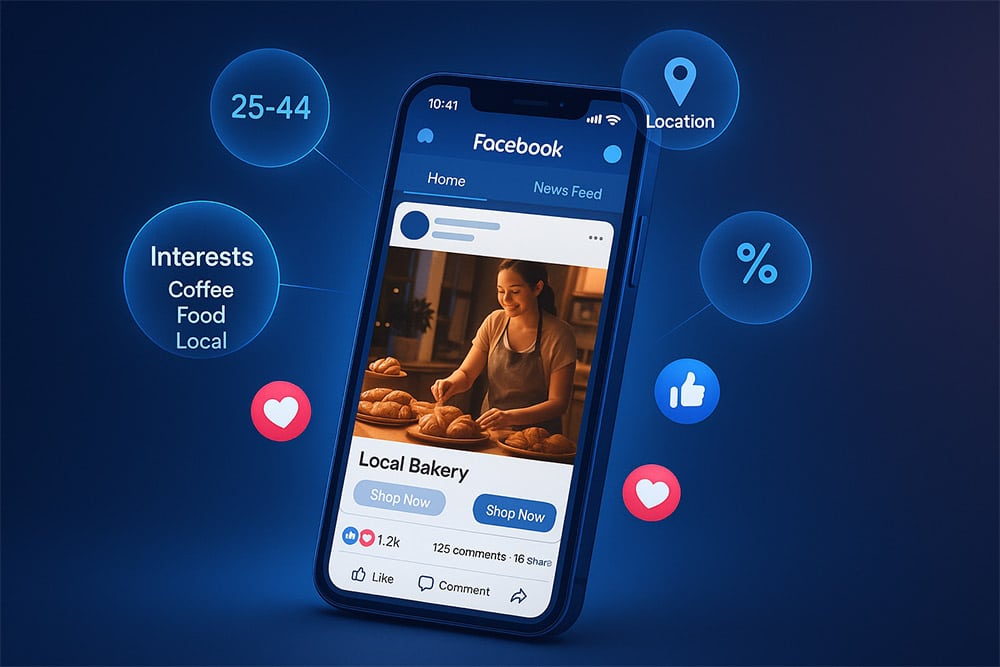
Facebook Ads (which also include Instagram Ads through Meta’s platform) give small businesses access to one of the most sophisticated audience-targeting systems ever built. With over 3 billion active monthly users, Meta’s ad platform lets you reach people based on demographics, interests, behaviors, location, and even life events.
What Makes Facebook Ads Powerful for Small Businesses:
Hyper-Precise Audience Targeting
You can target people by age, gender, location (down to a zip code), interests (e.g., “home renovation,” “organic food,” “fitness”), income level, relationship status, parenting stage, and dozens of other criteria. For a small business, this means zero wasted impressions on people who will never buy from you.
Visual Storytelling at Scale
Facebook and Instagram are visual platforms. Your ads can be images, videos, carousels, Stories, or Reels — giving you rich creative formats to tell your brand story compellingly. Great creative can make a small business look like a national brand.
Low Entry Cost
You can start running effective Facebook Ads with as little as $5–$10 per day. This low barrier makes it one of the most accessible paid advertising tools for small businesses with limited budgets.
Retargeting Power
Facebook’s pixel technology lets you retarget people who visited your website, watched your videos, or engaged with your page — serving them follow-up ads until they convert. This is one of the highest-ROI ad strategies available.
The Catch:
People on Facebook and Instagram aren’t necessarily looking to buy — they’re there to scroll. Your ad needs to stop the scroll, earn their attention, and create desire where none existed. This requires strong creative and a longer conversion window.
Section 2: Google Ads — Capturing Ready-to-Buy Customers
Google Search Ads for local small business
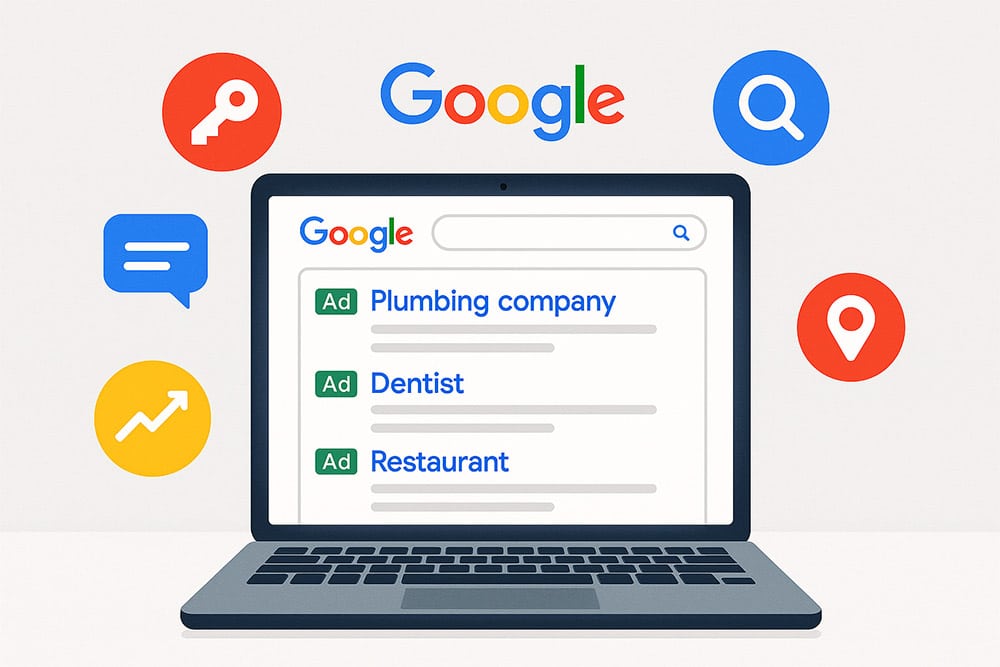
Google processes over 8.5 billion searches per day. When someone types “emergency plumber near me” or “best Italian restaurant in [your city]” — Google Ads puts your business at the very top of those results, ahead of every organic listing.
What Makes Google Ads Powerful for Small Businesses:
Capture High-Intent Buyers
The person searching “AC repair near me at 3pm in July” is not browsing — they are ready to hire someone right now. Google Ads puts you in front of customers at the exact moment of peak purchase intent. This is the highest-quality traffic you can buy.
Local Search Domination
With Google Local Service Ads and location extensions, small businesses can appear at the very top of local search results with their name, phone number, rating, and hours — making it effortless for customers to call or visit.
Pay Only for Clicks
Google Ads operates on a pay-per-click (PPC) model — you only pay when someone actually clicks your ad. If 1,000 people see your ad but don’t click, you pay nothing. This makes budget management more predictable.
Measurable, Trackable ROI
Google Ads offers exceptional conversion tracking. You can see exactly which keywords drove phone calls, form submissions, purchases, and in-store visits — giving you crystal-clear data on what’s working.
The Catch:
Google Ads can be significantly more expensive per click than Facebook Ads, especially in competitive industries like law, insurance, home services, and healthcare. A poorly managed Google Ads account can burn through budget quickly on irrelevant clicks. Keyword research and negative keyword lists are essential.
Section 3: Head-to-Head Comparison
Small business owner choosing between Facebook Ads and Google Ads
Factor |
Facebook Ads |
Google Ads |
|---|---|---|
| User Intent | Low — users are browsing, not searching | High — users are actively searching to buy |
| Targeting Method | Who they ARE (demographics, interests, behaviors) | What they WANT (keywords & search queries) |
| Ad Format | Images, video, carousel, Stories, Reels | Text search ads, display banners, shopping ads |
| Minimum Budget | $5–$10/day is viable | $20–$50+/day recommended for results |
| Avg. Cost Per Click | $0.50–$2.00 (varies by industry) | $2.00–$10.00+ (varies widely by keyword) |
| Best For | Brand awareness, visual products, new audiences | Immediate leads, local searches, high-intent buyers |
| Learning Curve | Learning Curve Moderate — creative strategy is key Steep — keyword & bid management essential | Steep — keyword & bid management essential |
| Speed to Results | Moderate — warming audience takes time | Fast — can get calls/leads same day |
| Retargeting | Excellent — pixel-based retargeting is powerful | Good — display network retargeting available |
| Visual Branding | Excellent — highly visual, story-driven formats | Limited — text-based search ads have no imagery |
| Local Targeting | Strong — radius and zip code targeting | Excellent — Local Service Ads dominate local search |
| Analytics & Tracking | Good — Meta Ads Manager dashboard | Excellent — granular keyword-level conversion data |
Section 4: Which Platform Wins for Your Industry?
Not every business is the same — and the right platform depends heavily on what you sell and who you’re selling to. Here’s our industry-by-industry recommendation:
Section 5: The Smart Answer — Use Both (Strategically)
Not every business is the same — and the right platform depends heavily on what you sell and who you’re selling to. Here’s our industry-by-industry recommendation:
Here’s the insider truth that many small businesses miss: Facebook Ads and Google Ads aren’t rivals — they’re teammates.
The most effective small business advertising strategies in 2026 use both platforms together, each doing what it does best:
The Power Combo Strategy:
Step 1 — Google Ads: Catch the Ready Buyers
Run Google Search Ads targeting high-intent keywords (“book now,” “near me,” “best [service] in [city]”). These people are ready to take action today. Capture them immediately with a clear offer and a fast-loading landing page.
Step 2 — Facebook Ads: Build the Audience
Run Facebook and Instagram Ads to build brand awareness with your ideal demographic. Use compelling video content, customer testimonials, and special offers to warm up audiences who aren’t quite ready to search yet — but soon will be.
Step 3 — Retargeting: Close the Loop
Use both platforms’ retargeting tools to re-engage people who visited your website but didn’t convert. Show them follow-up ads on Facebook and Google Display until they come back and take action.
This three-stage funnel — Awareness (Facebook) → Intent (Google) → Retargeting (Both) — is how the fastest-growing local businesses in 2026 are scaling their ad results.
Section 6: Budget Recommendations for Small Businesses
Monthly Ad Budget |
Recommended Strategy |
Suggested Platform Split |
|---|---|---|
| $150–$300/month | Start with one platform only | 100% Facebook Ads — lower CPCs, great testing ground |
| $300–$600/month | Add Google for local search | 60% Facebook Ads / 40% Google Ads |
| $600–$1,500/month | Full funnel strategy begins | 50% Google Ads / 35% Facebook Ads / 15% Retargeting |
| $1,500–$3,000/month | Aggressive multi-platform growth | 45% Google / 40% Facebook+Instagram / 15% Retargeting |
| $3,000+/month | Full omnichannel paid media | Custom split based on performance data and testing |
Section 7: 5 Common Mistakes Small Businesses Make with Paid Ads
No matter which platform you choose, avoid these costly errors:
- ❌ Running ads to your homepage. Always send ad traffic to a dedicated landing page designed to convert — not your general website homepage.
- ❌ Setting it and forgetting it. Paid ads require weekly monitoring and optimization. Budgets, bids, and creatives need regular attention to stay profitable.
- ❌ Targeting too broadly. Bigger isn’t better in paid advertising. Tight, specific audiences almost always outperform massive, broad ones.
- ❌ Ignoring the creative. On Facebook especially, your image or video IS the ad. Poor-quality visuals kill otherwise good campaigns before they start.
- ❌ Not tracking conversions. If you don’t have proper conversion tracking set up, you’re flying blind. Install the Meta Pixel and Google tag before spending a single dollar.
Conclusion: The Verdict from Campbell Marketing Group
So which is better — Facebook Ads or Google Ads?
For most small businesses in 2026, our answer is: start where your customers are hunting, then expand.
- If your customers search for your service when they need it (plumber, dentist, lawyer, locksmith) → Start with Google Ads.
- If your customers need to discover you before they know they want you (restaurant, salon, boutique, gym) → Start with Facebook/Instagram Ads.
- If your budget allows → Use both, strategically, and watch your growth compound.
At Campbell Marketing Group, we specialize in building paid advertising strategies that maximize every dollar you spend — whether that’s on Facebook, Google, or both. We handle everything from campaign setup and creative design to ongoing optimization and reporting, so you can focus on running your business while your ads work 24/7.
Ready to start advertising smarter? Let’s talk.
0 Comments