
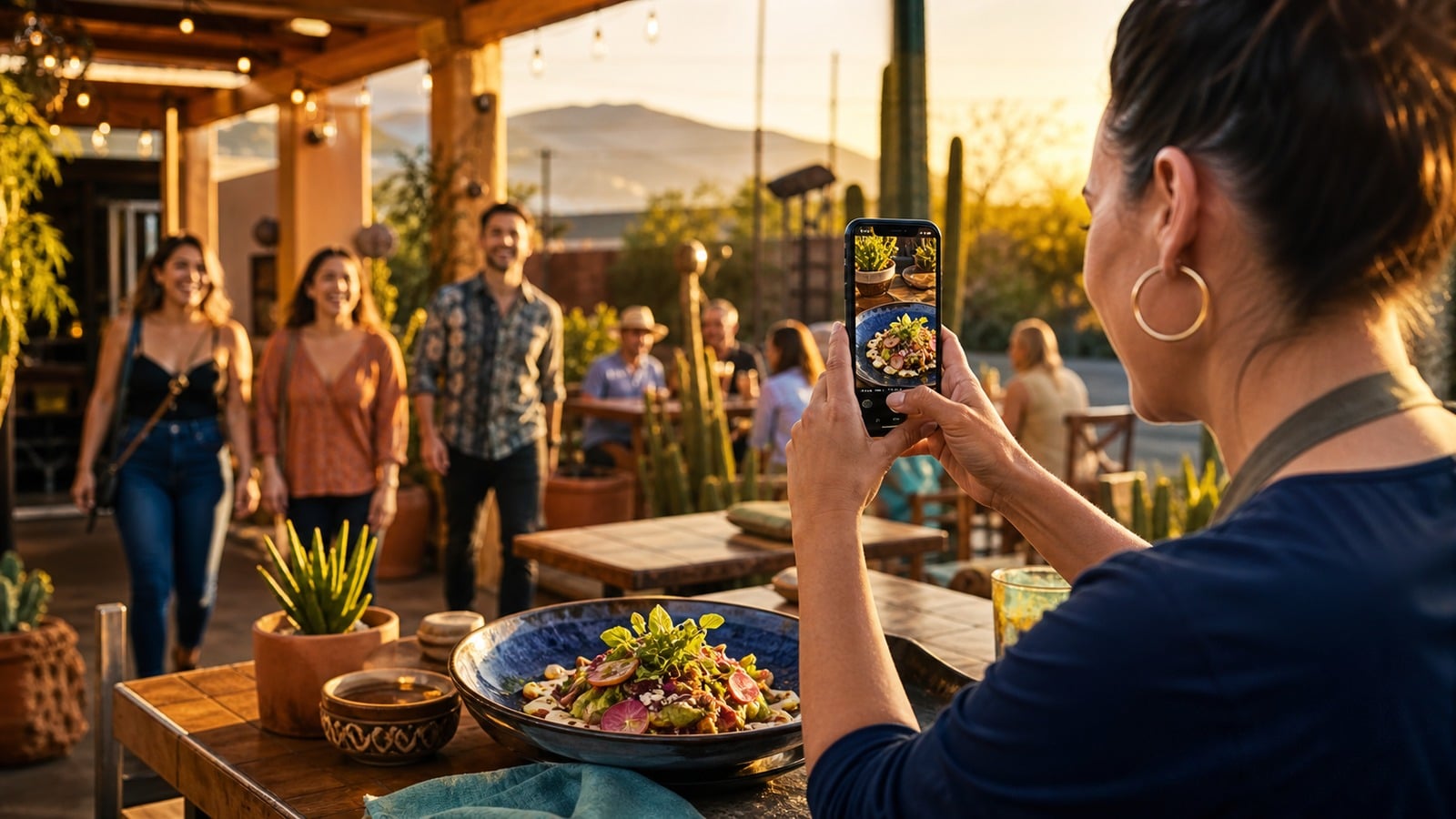
Great restaurant content does more than make people hungry. It makes the next visit feel timely, easy, and worth sharing.
Restaurant decisions are emotional and immediate. A guest sees a sizzling dish, a shaded patio, a familiar bartender, or a lively table and begins imagining the experience. Social media is uniquely suited to create that feeling – but only when the content moves beyond occasional food photos and disconnected promotions.
Effective restaurant social media marketing connects appetite, atmosphere, people, proof, and timing. It helps a potential guest answer three questions quickly: What will I experience? Why should I choose this place? Why should I go now?
Make the Food Look as Good as It Tastes
The dish is often the first point of attention, so treat food photography and video as an operating priority. Use natural side light or soft directional light, clean the plate edges, choose an angle that suits the dish, and capture movement when it adds appetite – slicing, pouring, finishing, steaming, or serving.
You do not need a full production crew for every post. A modern phone, stable framing, good light, and a few repeatable shooting locations can create strong everyday content. Schedule occasional professional photography for signature dishes, seasonal campaigns, the website, and advertising, then support it with authentic phone content from the team.
Show the People and Process Behind the Menu
Guests connect with stories they can see. Introduce the chef, bartender, baker, host, or longtime server. Explain how an ingredient is selected, show a prep ritual, share the inspiration for a special, or capture the energy before service. These moments make the restaurant feel specific rather than interchangeable.
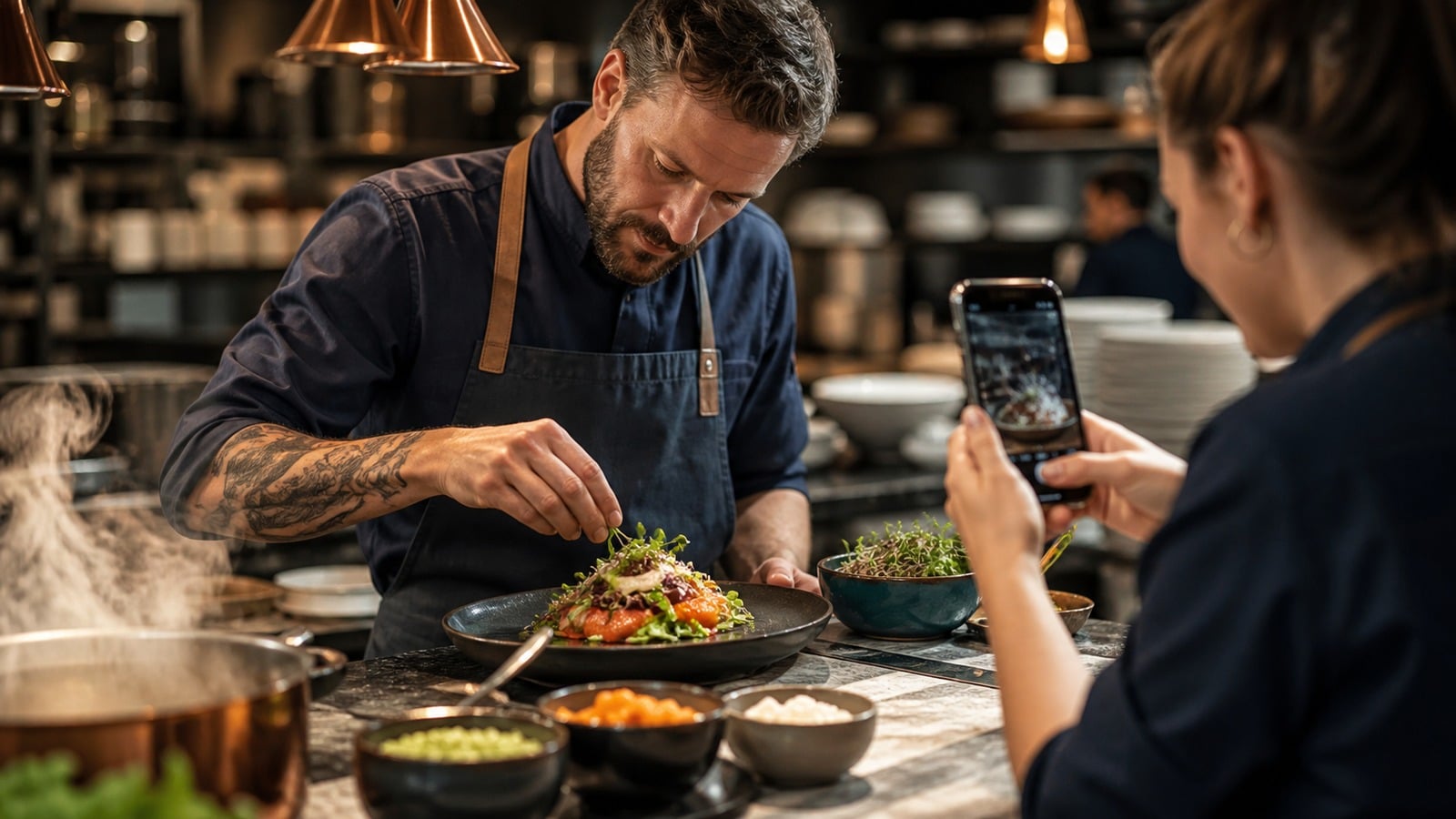
Behind-the-scenes content connects appetite with craftsmanship and personality.
Keep the story focused. One short video can answer one question: What makes the salsa different? How is the dough prepared? What does the team recommend for a first visit? A series of simple answers builds familiarity over time and gives the staff a sustainable content format.
Sell the Experience, Not Only the Plate
Customers choose restaurants for occasions as much as for food. Show the patio at sunset, the pace of a quick lunch, a family-friendly table, a date-night corner, live music, a game-day atmosphere, or a quiet morning coffee. Help people picture where your restaurant fits in their lives.
Use captions to add practical context: neighborhood, service times, reservation expectations, parking tips, dietary options, event details, and whether a special is limited. The more friction you remove, the easier it is for interest to become a visit.
Create Timely Reasons to Visit
Social content is most effective when it connects attention to a specific opportunity. Seasonal dishes, chef features, weekday specials, happy hour, catering windows, local events, and limited reservations can all create urgency without relying on constant discounts.
Post early enough for customers to make a plan, then remind them close to the decision window.
Use Stories or other short-lived formats for availability, sellouts, weather updates, and daily energy.
Create recurring features so followers know what to look for each week.
Give every offer a clear next step: reserve, call, order, visit, or send a message.
Keep hours, menus, links, location details, and reservation information accurate across profiles.
Invite Guests Into the Story
Guest-created content provides social proof and expands the restaurant's reach. Create photo-friendly moments without making the room feel like a set. A distinctive dish, thoughtful presentation, recognizable wall, event, or patio view can naturally encourage sharing.
When guests tag the restaurant, respond with appreciation and ask permission before reusing their photos or videos. Repost selectively so the feed remains cohesive. Customer perspectives add credibility because they show the experience through someone else's eyes.
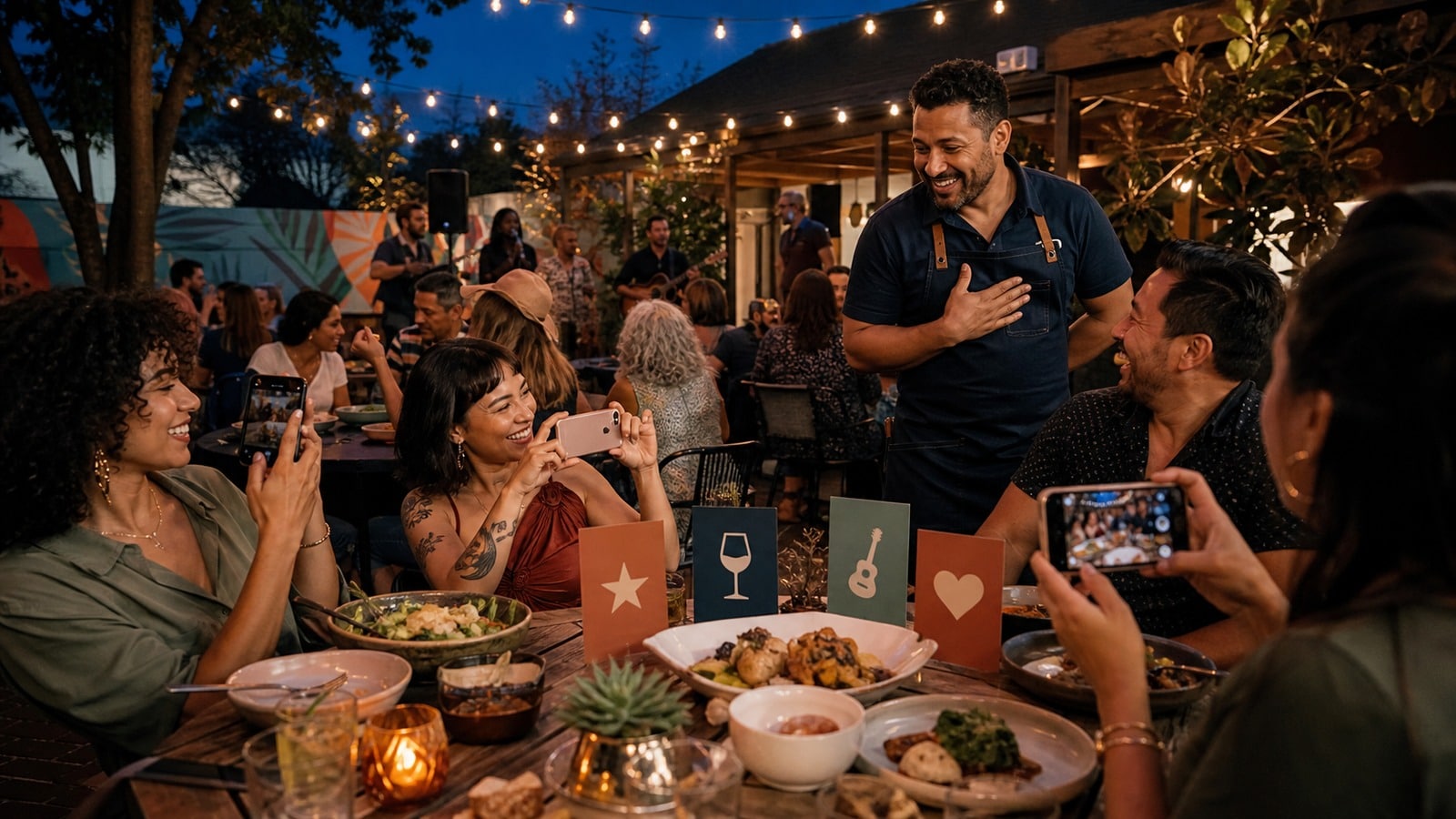
Community moments give guests a reason to participate, post, and return.
Treat Comments and Messages Like the Host Stand
Questions about reservations, ingredients, accessibility, hours, events, and large parties often appear in comments or direct messages. A fast, warm response can win the visit. Set clear responsibility for monitoring channels and create a simple escalation path for questions that require a manager.
The same hospitality standard should guide public feedback. Thank guests for positive comments, acknowledge concerns without arguing, and move sensitive details to a private conversation. The tone should feel like the best version of your in-person service.
Use Paid Social to Extend What Already Works
Advertising can place strong organic content in front of more relevant local customers. Start with posts that already earn meaningful engagement or communicate a clear offer. Target a practical service area and align the destination with the goal – reservation page, online ordering, event details, catering inquiry, or directions.
Avoid boosting every post by habit. Choose a business objective, use a specific audience and timeframe, and track the result. A smaller focused campaign can teach you more than a broad spend with no clear conversion path.
Measure Visits, Not Just Likes
Track reservation clicks, online orders, calls, direction requests, offer redemptions, event attendance, message inquiries, and customer comments about where they discovered you. Ask staff to listen for social mentions. Review which content themes and offers lead to real activity, then plan more of what works.
A Sustainable Weekly Content Rhythm
Share one appetite-focused dish or drink feature.
Publish one people, process, or behind-the-scenes story.
Promote one timely reason to visit with a clear next step.
Engage daily with questions, tags, reviews, and local community posts.
Capture fresh photos and short clips during one planned production window.
Restaurant social media marketing works when it feels like an extension of hospitality. Show what makes the experience special, give guests useful reasons to act, and make every digital interaction as welcoming as the dining room.
Fill More Tables With a Focused Social Strategy
Campbell Marketing Group helps restaurants and hospitality brands create visual content, community engagement, campaigns, and reporting that support real customer traffic. Request a strategy session to build a restaurant social media plan around your menu, audience, and goals.
Request a strategy session
Publishing Notes
This page is for the publishing team and is not part of the article body.
Image Files and Alt Text
04-restaurant-social-media-featured.jpg: A restaurant owner filming a signature dish as guests arrive on a Tucson-style patio.
04-restaurant-social-media-behind-scenes.jpg: A chef plating a colorful dish while a team member captures behind-the-scenes video.
04-restaurant-social-media-community.jpg: Guests enjoying and sharing a meal during a lively local restaurant event.
Brand reference: Campbell Marketing Group
0 Comments