
Google Ads Management as a Performance Engine
Structuring Campaigns Inside a Google Ads Account
Effective Google Ads management starts with campaign architecture built for clarity and performance. At Campbell Marketing Group, Shawn Campbell oversees campaign structure to align keyword intent, ad copy, and landing page relevance within each Google Ads account. Every Google Ad campaign follows a defined framework that supports clean reporting, conversion tracking, and ongoing optimization.
Each campaign segments search ads, display placements, and YouTube ads to maintain targeting precision and budget control. Keyword selection anchors every Google ad, with each keyword mapped to a tightly themed ad group to improve ad relevance and quality, a practice recommended by any Adwords agency. This structure strengthens ad rank while reducing wasted ad spend, a key focus for any Google Ads expert. While Google AdWords concepts still influence setup, modern Google advertising relies on data-driven decisions. A proper campaign structure enables advertisers to optimize efficiently, improve conversion rates, and manage campaigns with confidence across growing accounts.

Budget Control and Bid Management for ROI
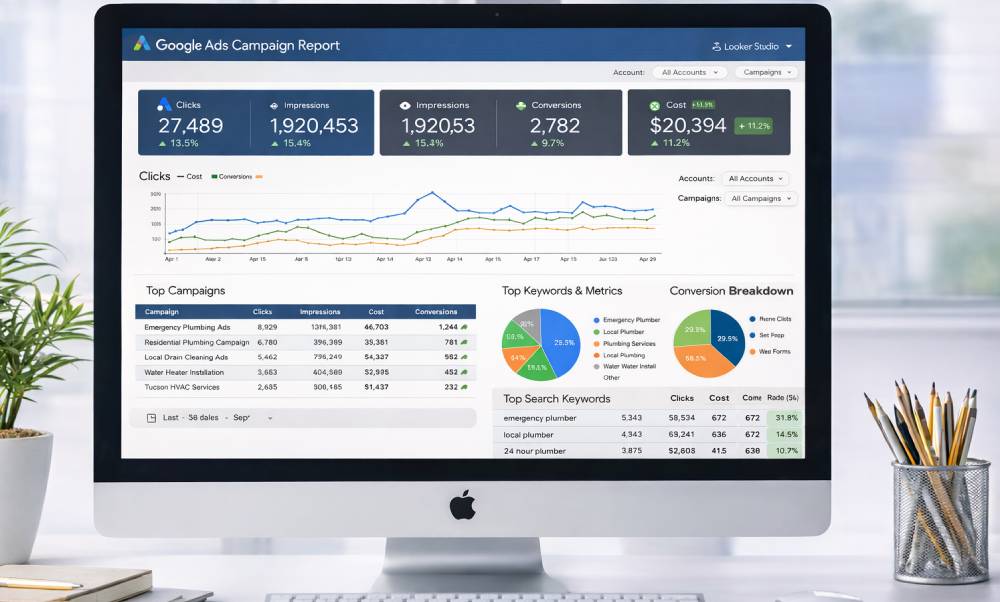
Budget control determines whether Google Ads succeed or fail. Google Ads management requires disciplined budget planning to prevent overspending while protecting high-performing campaigns, a necessity for any Google Ads agency. Campbell Marketing Group establishes clear budget thresholds before launch, ensuring every campaign aligns with revenue targets and business priorities. Google ads budget allocation occurs at the campaign level to maintain visibility into performance and cost.
Bid management directly influences conversion efficiency and roi. Each Google ad competes in real time, making bid accuracy essential for those who manage Google Ads campaigns. Shawn Campbell applies bid management strategies that balance visibility with cost control, avoiding overbidding that erodes roi or underbidding that limits reach. Google Ads allows granular bid adjustments by device, location, and timing, improving efficiency. When budget and bid strategy work together, campaigns scale without sacrificing return, creating consistent performance across Google Ads campaigns managed by an expert Google Ads team.
“Precious ipsum dolor sit amet consectetur
adipisicing elit, sed dos mod tempor”
Managing Campaigns at Scale With an Ad Manager
Using a Google Ad Manager and a Manager Account
As campaigns grow, an ad manager becomes necessary to maintain control. Google Ads Manager and a manager account enable centralized oversight across multiple Google Ads accounts. Campbell Marketing Group uses a Google Ads Manager account to manage campaigns, budgets, and conversions across multiple client accounts while preserving account-level separation.
An ad manager account provides a centralized dashboard for reporting, billing, and performance analysis. This structure enables the management of multiple campaigns without data conflicts or inefficiencies. Businesses that manage multiple Google Ads accounts benefit from consistent management strategies and streamlined workflows. Creating a Google Ads Manager simplifies collaboration between the advertiser and the management agency. For organizations scaling online advertising, this structure supports accuracy, accountability, and long-term growth, aligning with the goals of any expert Google Ads management.
From The Shawn Campbell Show Podcast
Real conversations on marketing, conversion optimization, and business growth - featuring industry leaders and real-world experience.
Optimization Techniques That Improve Conversion Rates
Optimization transforms active campaigns into profit-generating assets. Google ads management at Campbell Marketing Group focuses on continuous optimization across keyword performance, ad copy, landing page alignment, and conversion tracking. Shawn Campbell reviews Google Ads data on a structured schedule to identify inefficiencies, refine targeting, and improve conversion rates.
Optimization includes testing multiple ad variations to identify high-performing ad text and messaging, a strategy that a marketing agency would employ. Landing page relevance is critical, as ads and landing pages must align with keyword intent to drive conversions. Google Analytics integration supports attribution analysis and performance measurement across campaigns, enhancing the capabilities of a Google Ads agency. Successful Google Ads performance depends on ongoing refinement, not one-time setup. Through disciplined optimization, advertisers reduce wasted ad spend, improve roi, and achieve successful Google Ads results in competitive environments.
Frequently Asked Questions About Google Ads Management
What Is Google Ads Management and Why Does It Matter?
How Much Budget Is Needed for Google Ads?
How Often Should Google Ads Campaigns Be Optimized?
Key Takeaways
- Campbell Marketing Group delivers Google ads management led by owner Shawn Campbell.
- Structured campaign design improves conversion and roi
- Ad manager accounts support scalable oversight across multiple campaigns
- Continuous optimization protects ad spend and drives measurable growth, a principle emphasized by any marketing agency.