
Introduction
Social media has fundamentally changed the way local businesses connect with their communities. What once required expensive print ads, radio spots, or direct mail campaigns can now be accomplished with a smartphone, a thoughtful strategy, and a genuine desire to connect with the people in your area.
But for many local business owners, social media feels overwhelming. Which platforms should you be on? What should you post? How often? And how do you turn likes and followers into actual foot traffic and revenue?
The good news is that local businesses have a significant advantage on social media that national brands can never replicate: community. You know your customers by name. You’re woven into the fabric of your neighborhood. You have stories, faces, and a local identity that corporate brands can only dream of having. When you leverage that authentically on social media, the results can be extraordinary.
This guide from Campbell Marketing Group will walk you through everything you need to know to build a winning social media strategy for your local business — from choosing the right platforms to creating content that drives real customers through your door.
Why Social Media Is Essential for Local Businesses
Before we discuss strategy, let’s answer a common question: Does social media matter for my local business?
The answer is an unequivocal yes — and the numbers back it up:
- 74% of consumers rely on social media to guide their purchasing decisions
- 54% of social browsers use social media to research local products and services
- 78% of consumers say a company’s social media presence affects whether they trust the brand
- Local businesses that actively engage on social media report up to 3x more foot traffic than those that don’t
Social media is no longer optional for local businesses. It’s now a core way customers discover, evaluate, and choose where to spend locally.
Step 1: Choose the Right Platforms for Your Business
One of the biggest mistakes local businesses make is trying to be everywhere at once. Spreading yourself thin across six platforms results in inconsistent, low-quality content across all of them. Instead, identify the two or three platforms where your target audience is most active and focus your energy there.
Here’s a breakdown of the major social media platforms and the types of local businesses that tend to benefit most from each. Consider what type of content your business creates and where your ideal customers spend their time online. For example, Facebook suits community-focused businesses, Instagram is great for visual brands like restaurants and retailers, LinkedIn works best for B2B services, and TikTok reaches younger audiences with short-form video.
| Almost all local businesses | Adults 25–65+, community groups | |
| Visual businesses (food, retail, beauty, fitness) | Adults 18–45, lifestyle-focused | |
| Google Business Profile | All local businesses — non-negotiable | Local searchers, high purchase intent |
| B2B services, professional services | Professionals, business owners | |
| TikTok | Restaurants, retail, entertainment, trades | Adults 18–35, discovery-focused |
| Nextdoor | Hyper-local neighborhood businesses | Local homeowners and residents |
| Home décor, food, fashion, weddings | Women 25–54, planning-focused |
For most local businesses, start with Facebook and Instagram (they share an ad platform), and fully optimize your Google Business Profile. Used well, these three drive local visibility and customer growth.
Step 2: Optimize Your Profiles Before You Post a Single Thing
Your social media profiles are your digital storefronts. Before developing content, ensure every profile is complete and optimized. Incomplete profiles suggest your business isn’t serious—to customers and algorithms.
Every profile should include:
✅Business name— consistent across all platforms
✅Profile photo— your logo or a professional headshot
✅Cover photo or banner— a high-quality image representing your business
✅Complete bio/description— what you do, who you serve, and where you’re located
✅Website link— direct visitors to your homepage or a specific landing page
✅Phone number and address— make it easy for people to contact or find you
✅Business hours— especially important on Facebook and Google Business Profile
✅Call to action button— “Book Now,” “Call,” “Get Directions,” or “Learn More.”
✅Relevant keywords— include your city, neighborhood, and service type in your bio
Think of profile optimization as your foundation. Great content built on a weak profile is like a beautiful house built on a cracked foundation—it won’t stand.
Step 3: Build a Content Strategy That Serves Your Community
Content drives your social media presence, but not all posts have equal impact. For local businesses, the best content informs, entertains, or connects your audience to your brand and community.
The Content Mix: The 4-1-1 Rule
A proven content framework for local businesses is the 4-1-1 rule: for every 6 posts you publish, aim for:
- 4 posts that educate, entertain, or add value to your audience
- 1 post that shares curated content from a partner, community organization, or local event
- 1 post that directly promotes your products, services, or offers
This balance keeps your feed from becoming a nonstop stream of ads and makes you a trusted local voice worth following.
Content Types That Work for Local Businesses
Behind-the-Scenes Content
Show your business’s human side. A tour, morning routine, or prep video builds authenticity that polished ads lack. People love seeing local businesses behind the scenes.
Customer Spotlights and Testimonials
With permission, feature real customers and their stories. Success stories, transformations, or even quotes provide powerful social proof and make customers feel valued.
Local Community Content
Share content that reflects your connection to the community. Shout out to other local businesses, celebrate local events, post about local sports teams or milestones, or partner with a local charity. This positions your brand as a genuine community member — not just a business trying to make a sale.
Educational Tips and How-To Content
Share helpful knowledge. A plumber might post winterization tips, a nutritionist can offer meal ideas, or a bookkeeper can cover common tax mistakes. Educational content builds authority and keeps people engaged beyond promotions.
Promotions and Special Offers
Yes, you should absolutely promote your products and services — just not on every post. Flash sales, seasonal specials, loyalty rewards, and referral offers perform well when they appear alongside non-promotional content.
User-Generated Content (UGC)
Encourage customers to tag your business in their posts and reshare their content. A customer’s photo of their meal at your restaurant or their new haircut from your salon is authentic advertising that money can’t buy. Create a branded hashtag, run a UGC contest, or simply ask happy customers to share their experience and tag you.
Step 4: Post Consistently With a Content Calendar
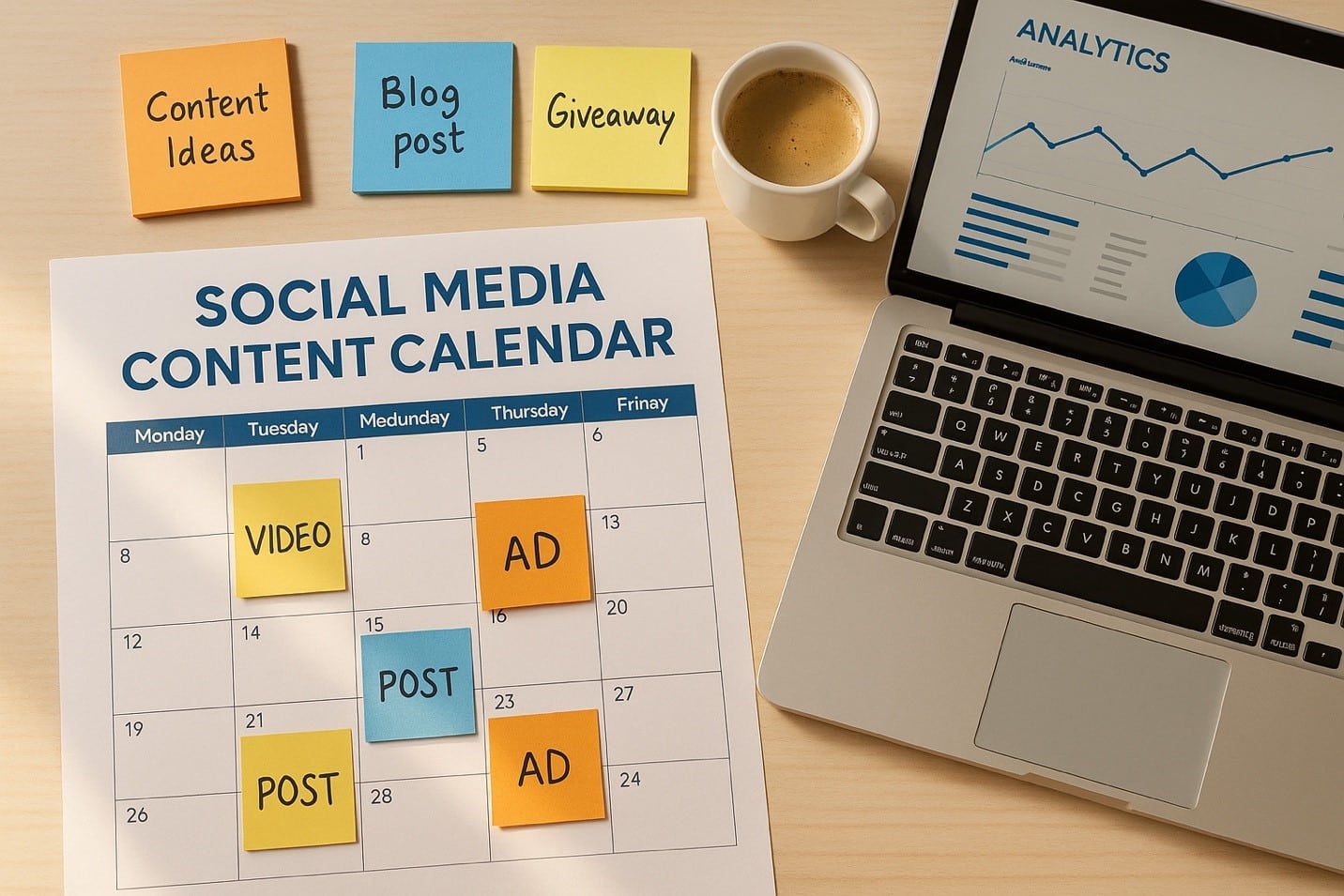
A content calendar is your roadmap. It helps you skip the daily “what to post?” stress and keeps your content strategic and varied.
Recommended posting frequency for local businesses:
| 3 – 5 times per week | |
| Instagram Feed | 3 – 4 times per week |
| Instagram Stories | Daily (if possible) |
| Google Business Profile | 2 – 3 times per week |
| 2 – 3 times per week | |
| TikTok | 3 – 5 times per week |
Best times to post for local businesses:
- Facebook & Instagram:Tuesday–Friday, 9–11am and 1–3pm local time
- LinkedIn:Tuesday–Thursday, 8–10am
- TikTok:Evening hours, 7–9pm, Tuesday through Saturday
Use scheduling tools to batch and plan your content. Spend 2–3 hours weekly to schedule all posts—it’s more efficient than daily posting.
Step 5: Leverage Local SEO Features on Social Media
Social media and local SEO work together. Maximize your visibility with these methods:
Use Location Tags on Every Post
Always tag your city or location on Instagram, Facebook, and TikTok. These posts appear in local searches and on location pages, expanding your reach to new locals.
Use Local Hashtags
Research and use hashtags specific to your city and community. For example: #TucsonEats, #ShopLocalPhoenix, #ScottsdaleSmallBusiness. These hashtags connect your content to local discovery feeds, helping nearby users find your business organically.
Check In and Tag Local Partners
When you partner with local businesses, attend events, or support causes, always tag those groups. This expands your reach to their audiences and strengthens local ties.
Keep Google Business Profile Active
Your Google Business Profile (GBP) is technically a social media platform — and one of the most powerful for local search. Post updates at least 2–3 times per week, respond to every review, add new photos regularly, and keep your information up to date. A well-maintained GBP directly influences how you rank in local Google search results.
Step 6: Engage, Engage, Engage
Publishing is half the job—the other half is active engagement, which most local businesses neglect.
Social media is a two-way street. Algorithms across platforms reward accounts that participate in conversations, not just those that broadcast content. Set aside 15–30 minutes each day to:
- Respond to every comment on your posts — even a simple “Thank you!” counts.
- Reply to every direct message promptly — missed DMs are missed, customers.
- Like and comment on posts from local community members, partner businesses, and loyal customers.
- Respond to every review— both positive and negative — on Facebook and Google.
- Participate in local Facebook groups— add value, answer questions, and be helpful without being promotional.
This daily engagement habit is what separates thriving local social media accounts from stagnant ones. It signals authenticity, builds relationships, and tells the algorithm that your account is active and worth promoting.
Step 7: Amplify With Local Social Media Advertising
Organic social media is powerful — but it has limits. If you want to accelerate your growth, reach new customers in your area, or promote a specific offer or event, paid social media advertising is one of the most cost-effective options available to local businesses.
Even a modest budget of $5–$15 per day on Facebook and Instagram can produce significant results when targeted correctly. For local businesses, the most effective paid strategies include:
- Local awareness ads— Show your ads to everyone within a specific radius of your location
- Lead generation ads— Collect contact information from interested locals directly within the platform.
- Retargeting ads— Show ads to people who have visited your website, engaged with your posts, or watched your videos
- Event promotion ads— Drive attendance to sales, grand openings, classes, or community events
- Offer and coupon ads— Promote time-sensitive deals to a local audience to drive immediate foot traffic.
Combining a strong organic presence with targeted paid campaigns creates a social media flywheel that continuously generates awareness, engagement, and customers for your local business.
Step 8: Track Your Results and Adjust
You can’t improve what you don’t measure. Every major social media platform offers free analytics that show exactly how your content is performing. Review your metrics at least once a month and use the data to refine your strategy.
Key metrics to track for local businesses:
| Reach | How many unique people saw your content |
| Engagement Rate | What % of viewers interacted with your post |
| Profile Visits | How many people clicked to view your profile |
| Website Clicks | Traffic driven from social media to your site |
| Follower Growth Rate | Whether your audience is growing consistently |
| Direct Messages | Volume of leads and inquiries generated |
| Google Business Views | How often your GBP appears in local searches |
Look for patterns: Which content types generate the most engagement? Which days and times perform best? Which platforms are sending the most traffic to your website? Let the data guide your decisions — and double down on what’s working.
The Local Business Social Media Checklist
Use this quick checklist to audit your current social media presence:
☐ Profiles are complete and consistent across all platforms
☐ Profile and cover photos are professional and on-brand
☐ Google Business Profile is fully optimized and actively updated
☐ Content calendar is in place with at least 2 weeks planned ahead
☐ Posting consistently on chosen platforms (minimum 3x per week)
☐ Using location tags and local hashtags on every applicable post
☐ Responding to all comments, messages, and reviews within 24 hours
☐ Featuring customer testimonials and user-generated content regularly
☐ Tracking analytics monthly and adjusting strategy based on data
☐ Running at least one paid local awareness or lead generation campaign
Conclusion: Your Community Is Waiting
Social media marketing for local businesses isn’t about going viral or chasing trends. It’s about showing up consistently for your community — sharing your story, celebrating your customers, providing genuine value, and being the kind of local business people are proud to support and recommend to their neighbors.
The local businesses that win on social media are the ones that treat it as a relationship-building tool, not just a broadcasting channel. When your community feels connected to your brand, they become your most loyal customers and your most powerful marketers.
You don’t need a massive budget or a professional marketing team to get started. You need a clear strategy, consistent effort, and an authentic voice — and the results will follow.
At Campbell Marketing Group, we specialize in helping local businesses build powerful, community-driven social media presences that translate into real business growth. From strategy and content creation to paid advertising and analytics, we’re here to help you show up where your customers are — and turn that visibility into revenue.
Ready to make social media work for your local business?
Reach out to Campbell Marketing Group today for a free local social media strategy session.
0 Comments